

Design a Wildlife Corridor
Provided by: WCS Education|Published on: March 1, 2025
Grades: 6, 7, 8
Type: Lesson Plans
Subjects: Engineering
Authors: Wildlife Conservation Society, Bronx Zoo
Region: Asia, New York City
Languages: English, Thai
This resource has been reviewed by SubjectToClimate's climate scientists and verified for scientific accuracy and up-to-date information. Learn about our review process →
This resource has been reviewed by SubjectToClimate's climate scientists and verified for scientific accuracy and up-to-date information. Learn about our review process →
Synopsis
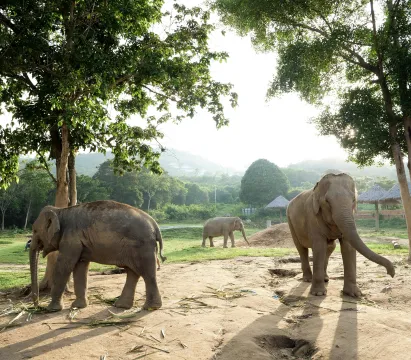
- In this design challenge activity from the Wildlife Conservation Society and the Bronx Zoo, students will learn about the need for wildlife corridors to help elephants travel to habitat areas that have been fragmented by roads and other human structures.
- Students will plan and create a model corridor, adhering to design constraints and performing iterative testing on their design.
Teaching Materials
Positives
- By giving students a real-world problem to design a solution for, they will be more engaged and invested in the design process.
Prerequisites
- Students should be familiar with measurements for length and weight.
- The resource is also available in Thai using this link.
Differentiation & Implementation
- Before completing the challenge, students can discuss biodiversity and the importance of protecting species. This may help them understand why keeping elephants safe is an important project.
- To access students' background knowledge, teachers can ask students if they have had any experience with wildlife crossing the road and resulting in danger for drivers and the animals.
- Many students may benefit from having the design constraints posted prominently in the classroom or from having them written or printed on a sheet of paper.
- Teachers can elaborate on and emphasize the importance of testing and redesigning solutions and the importance of failure. If a growth mindset is something students have background knowledge about, teachers can connect to this idea.
- After completing their designs, or as a step in the redesign process, students can participate in a gallery walk and leave constructive feedback on the designs.
Students can learn about the elephant's characteristics, distribution, and migratory patterns, as well as the idea of habitat fragmentation with this resource. They will work on constructing and testing a wildlife corridor to safeguard other species in their habitats while also facilitating the simple mobility of elephants. After reviewing the resources, it passed our scientific review procedure.
Teaching Tips
Standards
Resource Type and Format
Scientist Reviewed
This resource has been reviewed by SubjectToClimate's climate scientists and verified for scientific accuracy and up-to-date information. Our review process ensures that every resource in our library reflects the current state of climate science.
Learn about our review process →