
Ecosystem Interdependence: Salmon & Healthy Forests
Provided by: The Nature Conservancy|Published on: October 27, 2025
Grades: 6, 7, 8
Type: Lesson Plans
Subjects: Biology
Authors: Nature Lab by The Nature Conservancy
Region: Global
Languages: English
This resource has been reviewed by SubjectToClimate's climate scientists and verified for scientific accuracy and up-to-date information. Learn about our review process →
This resource has been reviewed by SubjectToClimate's climate scientists and verified for scientific accuracy and up-to-date information. Learn about our review process →
Synopsis
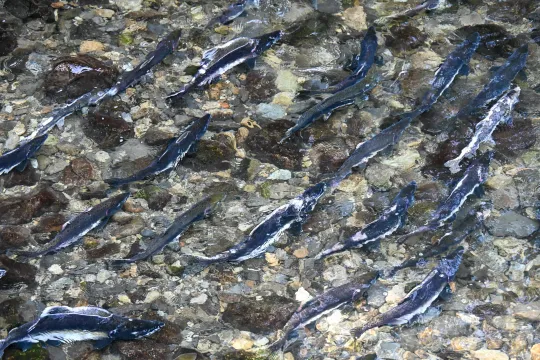
- In this lesson from Nature Lab by The Nature Conservancy, students will explore how salmon populations contribute to healthy forests and what challenges salmon populations currently face.
- The first session is spread amongst several days or weeks, as seeds need to germinate and grow before moving on to the next steps within the first session.
Teaching Materials
Positives
- Students will love hearing about the scientist who began his science journey in middle school.
- Many hands-on activities allow for a deeper understanding of the connections between organisms in an ecosystem.
Prerequisites
- Teachers will need to gather many materials and download the NetLogo program before beginning this lesson. Additionally, the version of NetLogo may not operate on newer devices. If the app doesn't run, teachers can skip over this part or substitute it with this activity.
- The link to the Project Learning Tree case study in Part 4 of Session 1 is broken. This resource is not necessary for completing the lesson.
- Some of the links for additional resources and reading resources are broken.
- Teachers can find the YouTube link for the introductory video here.
Differentiation & Implementation
- During this lesson, teachers can make connections to the Sustainable Development Goals, especially Goal 14, Life Below Water, and Goal 15, Life on Land.
- Before beginning the lesson, teachers and students can work together to create a word wall, vocabulary poster, or vocabulary cards using the vocabulary terms provided.
- Teachers can make connections to math and art using this piece of data art to show how salmon populations have declined.
This resource from The Nature Conservancy is a lesson plan that helps students explore the connection between salmon populations and forest ecosystems. The lesson is engaging and built around a real-world example of how wildlife management supports broader environmental health. Created by a trusted conservation organization, it encourages students to think critically about resource management. While it doesn’t include original data, students can create their own data using the Fishery tool. This resource is a great way to spark classroom conversations about food webs, conservation, and sustainability.
Teaching Tips
Standards
Resource Type and Format
About the Partner Provider
The Nature Conservancy
The Nature Conservancy is a global environmental nonprofit working to create a world where people and nature can thrive. The Nature Conservancy has grown to become one of the most effective and wide-reaching environmental organizations in the world.
Scientist Reviewed
This resource has been reviewed by SubjectToClimate's climate scientists and verified for scientific accuracy and up-to-date information. Our review process ensures that every resource in our library reflects the current state of climate science.
Learn about our review process →