

Fighting Fire with Fire
Provided by: The Nature Conservancy|Published on: July 24, 2025
Grades: 6, 7, 8
Type: Lesson Plans
Subjects: Biology, Earth and Space Sciences
Authors: Nature Lab by The Nature Conservancy
Region: Florida
Languages: English
This resource has been reviewed by SubjectToClimate's climate scientists and verified for scientific accuracy and up-to-date information. Learn about our review process →
This resource has been reviewed by SubjectToClimate's climate scientists and verified for scientific accuracy and up-to-date information. Learn about our review process →
Synopsis
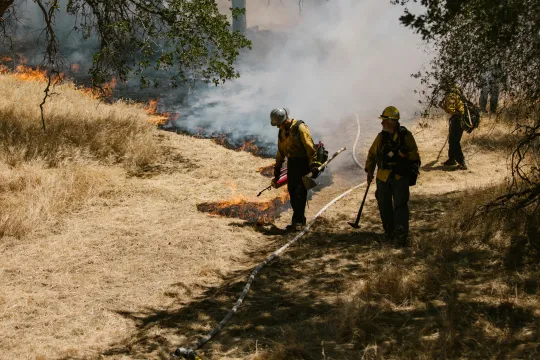
- In this resource from Nature Lab by The Nature Conservancy, students explore how planned burns can improve ecosystem health in Florida by reducing excess vegetation, supporting species adapted to fire, and strengthening habitat resilience, while also learning the careful planning involved in their use.
- Designed for grades 6–8, the two-session lesson uses videos, interactive scenarios, and graphic organizers to help students understand the ecological role of fire and the human choices that shape fire management strategies.
Teaching Materials
Positives
- Students will love seeing the video with creatures inside the gopher turtle's tunnels.
- The activity where students role-play as a Burn Boss is a fun one that helps students demonstrate their understanding of the material.
Prerequisites
- The link to the PowerPoint is broken. Teachers can find a PDF of the presentation here. Some of the links in the Additional Resources for Further Reading section are also broken.
Differentiation & Implementation
- Teachers can make connections to STEM careers by showing students the video introducing the fire manager and guiding students in an exploration of the path to becoming a fire manager.
- To make historical and cultural connections, students can research the uses of prescribed fire by ranchers and Indigenous groups.
- Teachers may want to extend the discussion about animal adaptations by asking students to list other examples of structural and behavioral adaptations they have observed in animals.
- Teachers can make connections to climate change by discussing the climate change impacts that make areas more susceptible to wildfires, thus increasing the need for effective fire management.
In this lesson, students will learn about prescribed fires and how they differ from wildfires. They will also learn why prescribed fires are helpful for the environment. Fire and forest management are topics that come up when talking about wildfires, including how their frequency and intensity have changed as the climate changes. The information presented is accurate, and this resource is recommended for teaching.
Teaching Tips
Standards
Resource Type and Format
About the Partner Provider
The Nature Conservancy
The Nature Conservancy is a global environmental nonprofit working to create a world where people and nature can thrive. The Nature Conservancy has grown to become one of the most effective and wide-reaching environmental organizations in the world.
Scientist Reviewed
This resource has been reviewed by SubjectToClimate's climate scientists and verified for scientific accuracy and up-to-date information. Our review process ensures that every resource in our library reflects the current state of climate science.
Learn about our review process →