
Findings from the Field, Volume 9
Provided by: Gulf of Maine Research Institute|Published on: July 16, 2026
Grades: 6-AP
Type: Scientific Reports
Subjects: Biology, Earth and Space Sciences, English Language Arts, Mathematics
Authors: Gulf of Maine Research Institute
Region: Maine, Massachusetts, New Hampshire
Languages: English
This resource has been reviewed by SubjectToClimate's climate scientists and verified for scientific accuracy and up-to-date information. Learn about our review process →
This resource has been reviewed by SubjectToClimate's climate scientists and verified for scientific accuracy and up-to-date information. Learn about our review process →
Synopsis
- This student science journal collects field research articles and nature notes written by middle and high school students investigating ecological changes connected to the Gulf of Maine.
- Research topics include hemlock woolly adelgid and emerald ash borer infestations, Japanese knotweed and biocontrol psyllids, Atlantic white cedar salt tolerance, marine debris and microplastics, intertidal seaweed distribution, and coastal flooding.
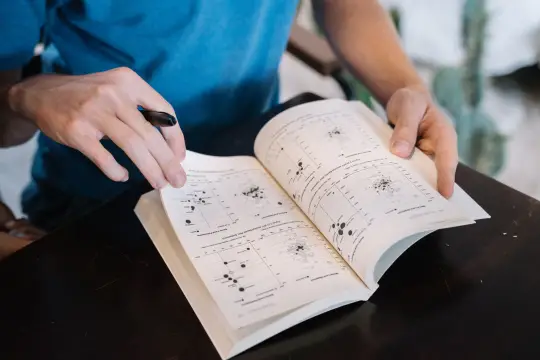
- Each article follows a research format with a question, methods, data tables and graphs, and conclusions, showing how students collect and analyze field measurements to draw evidence-based claims.
Teaching Materials
Classroom Implementation:
- The articles range widely in reading level and research complexity, from short observational nature notes to a full statistical study, so teachers should assign individual pieces matched to a class's grade level and comfort with data.
- The marine debris and seaweed studies work well for a lesson on sampling design, quadrats and transects, and distinguishing correlation from causation in environmental data.
- Pair the invasive species articles (hemlock woolly adelgid, emerald ash borer, Japanese knotweed) to have students compare monitoring methods and discuss the trade-offs of biological control such as introducing predator beetles or psyllids.
- Wrap up the reading of these articles with a discussion about what kids and youth can do, through science, to advance biodiversity conservation and prevent climate change.
Extensions:
- Use one or more articles as mentor texts before students design their own local field investigation, having them identify the research question, variables, methods, and data visualizations; this can be treated as a science fair project.
- Alternatively, repeat one of the student experiments to verify findings, stressing the importance of replicability and peer review in science.
- Or, take an experiment you were already planning on conducting in class and ask students to follow this template to present their findings as a final project.
Literacy Connections:
- Use one of the research articles to guide students through what scientific literature looks like.
- Break down each section of a report and explain its purpose—why are research papers structured this way?
- Practice writing an abstract for a piece of scientific literature at grade-level.
- Have students label where in the article they find the author's claim, evidence, and reasoning.
This resource is a collection of research articles and notes authored by students in the Gulf of Maine region. Each article is well-sourced and presents ecosystem threats. Climate change is addressed whenever appropriate. This resource serves to empower students that they can engage in work to heal their ecosystems and positively impact the global climate and is recommended for teaching.
Teaching Tips
Standards
Resource Type and Format
Scientist Reviewed
This resource has been reviewed by SubjectToClimate's climate scientists and verified for scientific accuracy and up-to-date information. Our review process ensures that every resource in our library reflects the current state of climate science.
Learn about our review process →