
Fungus: The Plastic of the Future
Provided by: The Kid Should See This|Published on: August 29, 2025
Grades: 6, 7, 8, 9, 10, 11, 12
Type: Articles/Websites
Subjects: Biology, Engineering
Authors: The Kid Should See This, Motherboard
Region: Europe, Global, New York
Languages: English
This resource has been reviewed by SubjectToClimate's climate scientists and verified for scientific accuracy and up-to-date information. Learn about our review process →
This resource has been reviewed by SubjectToClimate's climate scientists and verified for scientific accuracy and up-to-date information. Learn about our review process →
Synopsis
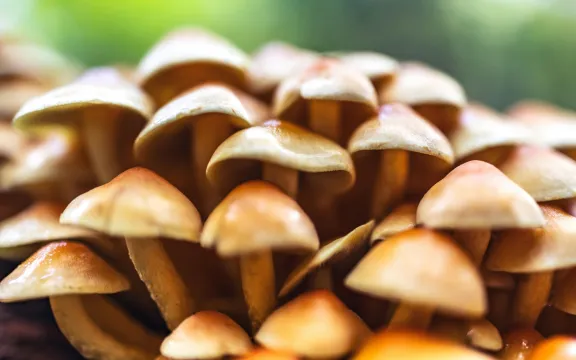
- This article from The Kid Should See This features and discusses a video showing companies and designers in New York, the Netherlands, and other locations working to perfect and implement a mycelium-based plastic.
- Students will see the potential applications for the alternative in furniture, packaging, and other items, and hear how the scientists grow and create the products.
Teaching Materials
Positives
- This resource is a wonderful example of collaboration, featuring multiple organizations and companies working to design applications for the fungus-based plastic.
- Both the video and the article have a hopeful tone, which gives the viewer hope for a better future with less unnecessary plastic.
Prerequisites
- Students should understand that plastics are currently produced using oil.
- Some of the embedded links may be broken.
Differentiation & Implementation
- Before exploring this resource, teachers can send students around the room to record things made from plastic. Teachers can then have students discuss why plastic is used to produce so many things. Students may point to its durability, availability, or something else.
- Teachers can use this lesson to illustrate the problem of plastic pollution and students can watch the linked videos at the bottoms about other fungi solutions.
- To connect this resource to the UN Sustainable Development Goals, teachers and students can brainstorm all the ways that plastic production and emissions are problematic. Students can point to the pollution harming wildlife and causing human health issues by contaminating the water and the production that releases emissions. Then, after making this list and watching the video, students can identify which of the goals may be addressed by implementing the solution of mycelium-based plastics.
- SDG connections include Goal 6, Clean Water and Sanitation, Goal 12, Responsible Consumption and Production, and Goal 14, Life Below Water.
In this video, viewers will see how some researchers are using fungi to create sustainable packaging materials and other items. The video explains the process of how the materials are created and the environmental benefits of the materials. This product is a great example of how innovation and technological improvements can help protect the environment and help with environmental and climate problems. The company is still active today. The information presented is accurate, and this resource is recommended for teaching.
Teaching Tips
Standards
Resource Type and Format
About the Partner Provider

The Kid Should See This
The Kid Should See This is a Webby award-winning collection of over 7,000 kid-friendly videos, curated for teachers and parents who want to share smarter, more meaningful media in the classroom and at home. Selections are grown-up-friendly, too. And thanks to TKSST members, it’s free and ad-free for everyone. Start conversations, spark questions, and inspire offline exploration for all ages.
Scientist Reviewed
This resource has been reviewed by SubjectToClimate's climate scientists and verified for scientific accuracy and up-to-date information. Our review process ensures that every resource in our library reflects the current state of climate science.
Learn about our review process →