

Hands-on Greenhouse Gas Molecule Models
Provided by: Climate Science Demonstrations|Published on: November 26, 2025
Grades: 3, 4, 5, 6, 7, 8
Type: Videos
Subjects: Science, Chemistry
Authors: Climate Science Demonstrations
Region: Global
Languages: English
This resource has been reviewed by SubjectToClimate's climate scientists and verified for scientific accuracy and up-to-date information. Learn about our review process →
This resource has been reviewed by SubjectToClimate's climate scientists and verified for scientific accuracy and up-to-date information. Learn about our review process →
Synopsis
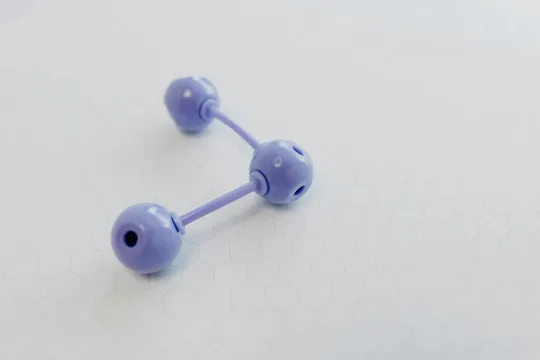
- This video, provided by CLEAN, describes how the nitrogen and oxygen molecules in the atmosphere are different from the carbon dioxide molecules, using tennis ball models of the molecules to demonstrate the differences.
- Students will learn why those differences matter for the greenhouse effect and why other parts of the electromagnetic spectrum aren’t affected by those differences.
Teaching Materials
Positives
- This video is less than 4 minutes, well-paced, and simple to follow.
- If given the chance to make their own, students will benefit from the hands-on experience.
Prerequisites
- Students should already have some background knowledge of our atmosphere and a general understanding of the greenhouse effect.
Differentiation & Implementation
- Teachers can use these models as a hands-on component in a lesson about molecules, atomic structure, the electromagnetic spectrum, greenhouse gases, or climate change.
- After a unit or lesson about climate change and greenhouse gases, students can demonstrate their understanding by creating these models and taking them to younger students or other teachers to demonstrate how they are related to climate change.
- Have students explore methane (CH4) and nitrous oxide (N2O) as well, then compare them to carbon dioxide and see if students can guess which molecule is the best at trapping heat.
This simple demonstration visually models how carbon dioxide traps heat in the atmosphere. Basic science is presented very clearly, with a focus on the molecules that comprise most of our atmosphere and the different wavelengths of light. This resource is recommended for teaching.
Teaching Tips
Standards
Resource Type and Format
Scientist Reviewed
This resource has been reviewed by SubjectToClimate's climate scientists and verified for scientific accuracy and up-to-date information. Our review process ensures that every resource in our library reflects the current state of climate science.
Learn about our review process →