

Interpreting Earth's Climate Record
Provided by: PBS|Published on: February 2, 2024
Grades: 9, 10, 11, 12
Type: Videos
Subjects: Earth and Space Sciences
Authors: PBS
Region: Polar Regions, Global
Languages: English
This resource has been reviewed by SubjectToClimate's climate scientists and verified for scientific accuracy and up-to-date information. Learn about our review process →
This resource has been reviewed by SubjectToClimate's climate scientists and verified for scientific accuracy and up-to-date information. Learn about our review process →
Synopsis
- These two videos, an article, and discussion questions examine the scientific analysis of the Antarctic ice sheet and fossil sea shells and what these analyses tell us about the Earth's atmosphere and ocean temperatures in antiquity.
- Students will learn about and discuss the differences between direct and indirect evidence, the implications of the correlation between atmospheric CO2 levels and temperature, and the weight of different datasets confirming the same conclusion.
Teaching Materials
Positives
- Both videos are well-produced and filled with intriguing visuals.
- Both videos interview geologists who are experts in their field.
Prerequisites
- To access the Spanish subtitles, click the dropdown menu to the right of the video.
- To download the video, you must sign up with a free account.
- Students should understand the Keeling curve, carbon dioxide, and climate change.
Differentiation & Implementation
- After watching the video, science teachers can begin a lesson on how humans impact the Earth's climate.
- Inspired by the two examples of field studies and research, students can discuss the importance of funding scientific endeavors.
- Teachers can show this video after teaching about the Keeling Curve and its importance.
- This video can augment a chemistry lesson about how the same element can exist in different forms.
- The resource includes an English-to-Spanish transcript for the videos, which can benefit ELL students or bilingual classes.
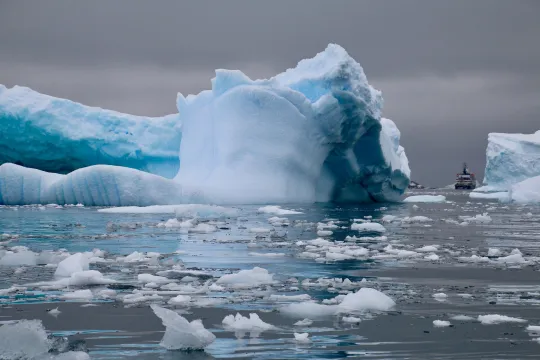
This resource from PBS Learning Media features two short videos about uncovering the Earth’s climate history. The first video follows geologist Ed Brook as he studies the history of atmospheric carbon dioxide using ice cores from the Antarctic ice, which provide direct evidence of what the air was like up to eight hundred thousand years ago. The second video highlights geologist Andrea Dutton’s work studying fossil sea shells to measure ocean temperatures indirectly back millions of years. Both of these videos feature informative graphics and clear narration. Teachers should stress to students that both studies show the same pattern using different data, adding credence to their results. The site includes support material for teachers, background reading, and transcripts of both videos in English and Spanish. This resource features a wealth of information, is accessible to all learners, and is recommended for teaching.
Teaching Tips
Standards
Resource Type and Format
Scientist Reviewed
This resource has been reviewed by SubjectToClimate's climate scientists and verified for scientific accuracy and up-to-date information. Our review process ensures that every resource in our library reflects the current state of climate science.
Learn about our review process →