
Power Outages and Energy Systems
Provided by: Ten Strands|Published on: July 3, 2025
Grades: 4
Type: Lesson Plans
Subjects: Science, Social Studies
Authors: Seeds to Solutions, Ten Strands
Region: California
Languages: English
This resource has been reviewed by SubjectToClimate's climate scientists and verified for scientific accuracy and up-to-date information. Learn about our review process →
This resource has been reviewed by SubjectToClimate's climate scientists and verified for scientific accuracy and up-to-date information. Learn about our review process →
Synopsis
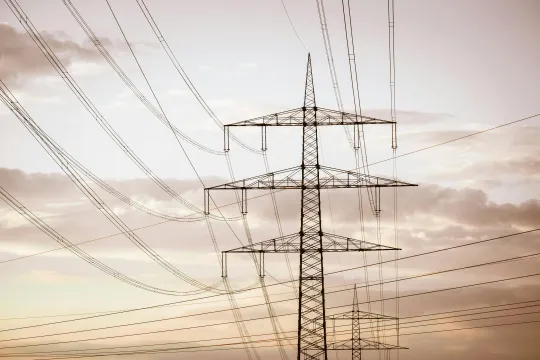
- In this Seeds to Solutions unit from Ten Strands and the San Mateo County Office of Education, students will learn about the increasing frequency of power outages due to climate change and understand how to prevent and prepare for future outages.
- Students will explore graphs to see the increase in power outages throughout recent history, create a model to show electricity going from the grid to their homes and schools, explore the relationship between extreme weather and power outages, analyze how extreme heat impacts energy use, evaluate and categorize different sources of energy, discuss the difference between mitigation and adaptation while considering equity and justice, determine the relationship between power outages and climate change, and create solutions their community can use to become more resilient in the face of increasing power outages.
Teaching Materials
Positives
- This unit leverages hands-on activities and visual representations to help young students grasp the complex systems that generate all kinds of energy.
- Students will benefit from the variety of stories and perspectives to help them see a full picture of how people of different backgrounds can be impacted differently by the same events.
Prerequisites
- Though climate change is addressed more in Lesson 5, students may benefit from having the concept introduced at a very basic level before Lesson 3, as there are many references to climate change in this lesson.
Differentiation & Implementation
- Teachers can use the vocabulary words introduced throughout the unit in word work that is part of their regular classroom routine.
- After creating the model with the circuit in Lesson 2, teachers can introduce students to the virtual experiment listed in the alternate directions. If online educational free-play is a regular routine in the classroom, teachers can add this virtual lab as an option for students to explore and compare it to the real model they created in class.
- If students struggle to remember the difference between weather and climate in Lesson 3, teachers can show them this video to help refresh their knowledge about this concept.
- In Lesson 6, some students may need the option to record their energy expert presentation to show to the class rather than presenting.
This resource is a collection of lesson plans that explore how we get our power, what causes power outages, the role of extreme weather in power outages, climate change, and how people can take action to prepare for and reduce power outages. A big focus of these lessons is on how electricity production and use, weather and climate, and human actions are connected and come together to impact power outages and the resiliency of the electrical grid. The information presented is accurate, and this resource is recommended for teaching.
Teaching Tips
Standards
Resource Type and Format
About the Partner Provider
-thumb.webp)
Ten Strands
Ten Strands is a California–based nonprofit established in 2012. Their mission is to strengthen the partnerships, strategies, and systems that advance environmental literacy, ensuring all California TK–12 students thrive in sustainable, resilient schools and engage in meaningful environmental learning experiences, both in and beyond the classroom. They operate with a small, diverse, and nimble staff and strategic partners throughout the state. Ten Strands utilizes the largest and most diverse institution in California—the public school system—to impact 58 county offices of education, more than 1,000 school districts, approximately 10,000 individual schools, over 300,000 teachers, and 5.8 million children.
Scientist Reviewed
This resource has been reviewed by SubjectToClimate's climate scientists and verified for scientific accuracy and up-to-date information. Our review process ensures that every resource in our library reflects the current state of climate science.
Learn about our review process →