
Social & Economic Impacts of Grand River
Provided by: Grand Valley State University|Published on: December 12, 2024
Grades: 6, 7, 8, 9, 10, 11, 12
Type: Lesson Plans
Subjects: Social Studies, History
Authors: Groundswell Stewardship Initiative
Region: Southwest Michigan
Languages: English
This resource has been reviewed by SubjectToClimate's climate scientists and verified for scientific accuracy and up-to-date information. Learn about our review process →
This resource has been reviewed by SubjectToClimate's climate scientists and verified for scientific accuracy and up-to-date information. Learn about our review process →
Synopsis
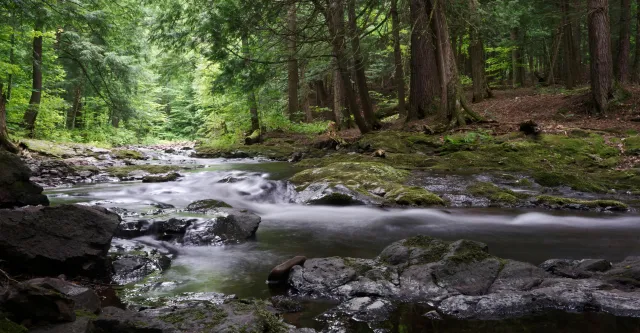
- In this lesson, students will use historical documents to understand the economic and cultural importance of Michigan's Grand River.
- Students will read primary sources to understand the role of the Grand River over time, interpret artifacts from different eras, and create a timeline of the river's history.
- Students will learn about the importance of the river to the Anishinabek people, Hopewell cultures, early settlers, the local furniture industry, and urban development.
Teaching Materials
Positives
- Having students work in expert groups will give them a sense of responsibility for their research.
- The resource includes a wealth of knowledge in the form of primary sources and artifacts for each era of the Grand River's history.
Prerequisites
- Students should be familiar with timelines and should know how to interpret primary sources to hypothesize about the past.
- Teachers may need to define some of the terms for students depending on which of the primary sources they are reading.
- Many of the primary sources begin or end mid-sentence. With these teachers may want to ask studetns to either begin or end reading in the closest complete section.
- If students have never worked with primary sources before, it may be appropriate to discuss the ideas and perceptions at play during the writing of these materials and to discuss how these perceptions negatively impacted populations.
- Some of the materials in the 1901-2000 folder are not for student use. Teachers may want to create a separate folder for students to use.
Differentiation & Implementation
- After creating the timeline, students can talk about the future of the Grand River using their knowledge of climate change and other human impacts.
- Some students may benefit from printing artifacts and primary sources and having the option to use highlighters or sticky notes to annotate the materials.
- Younger students may benefit from being in groups that allow each member to read only one primary source, artifact, or section, as the abundance of information may be overwhelming for students with low reading stamina.
- Connect this resource to climate change topics by discussing the effects of climate change on freshwater resources, how fluctuations in river flows may affect communities, and how the ecological restoration efforts mentioned in the video can support climate mitigation as well.
This resource highlights the impacts of human activities on river quality and resources, including ways to mitigate these impacts. The Grand River in Michigan is a typical example and would be interesting for students to learn how and why rivers change over time. This resource is well-sourced and is recommended for teaching.
Teaching Tips
Standards
Resource Type and Format
Scientist Reviewed
This resource has been reviewed by SubjectToClimate's climate scientists and verified for scientific accuracy and up-to-date information. Our review process ensures that every resource in our library reflects the current state of climate science.
Learn about our review process →