
Wild Biomes: America’s Rainforests & Deserts
Provided by: The Nature Conservancy|Published on: February 16, 2025
Grades: 3, 4, 5, 6, 7, 8
Type: Activity - Classroom
Subjects: Biology, Earth and Space Sciences, Geography
Authors: Nature Lab by The Nature Conservancy
Region: Washington, Arizona
Languages: English
This resource has been reviewed by SubjectToClimate's climate scientists and verified for scientific accuracy and up-to-date information. Learn about our review process →
This resource has been reviewed by SubjectToClimate's climate scientists and verified for scientific accuracy and up-to-date information. Learn about our review process →
Synopsis
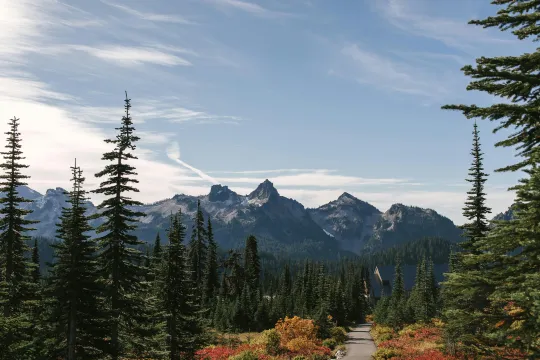
- Using this teacher guide from The Nature Conservancy, students will take a virtual field trip to explore the Pacific Northwest Rainforest in Washington State, Mount Rainier, ecosystems in the Great Basin Desert and Sonoran Desert in Arizona, and more.
- Students will learn about the climate types associated with rainforests and deserts, the trees and animals that live on the Olympic Peninsula, the importance of freshwater, the water cycle, natural vs. urban watersheds, water scarcity in places like Phoenix, and flash flooding in the Verde River.
- Students will also hear from Seattle-based hydrologist Cari Bigerstall, who will talk about her career and guide them through the field trip.
Teaching Materials
Positives
- The field trip video does an excellent job of introducing content-specific vocabulary.
- Students will learn about a variety of different topics, with breaks showcasing beautiful images of the environments.
- The featured class of 4th graders is an excellent example of respectful and inquisitive students.
Prerequisites
- The Teacher Guide does not include the link to the virtual field trip video. Teachers can find the video HERE.
- Most of the links in the guide are not clickable.
- Teachers may want to share the discussion questions with students ahead of time to keep them focused on key details in the video.
Differentiation & Implementation
- Teachers can discuss how human land use and human-caused climate change impact rainforests all over, focusing on how it specifically impacts those in the United States.
- Teachers can also talk about how climate change exacerbates flooding and droughts in places like Arizona.
- Geography teachers can make connections to this topic by talking about climate types and how they vary from place to place, citing Arizona as an example of an arid/semi-arid climate.
- After hearing about Cari Bigerstall, students can research what it takes to become a freshwater scientist and determine why they may or may not enjoy that career.
- Teachers can use this in a flipped classroom model, asking students to watch the virtual field trip to prepare for the discussion questions in the next class.
- Science teachers can use this field trip to follow a lesson about the water cycle, citing water cycle activity present in Mount Rainier.
- Following the video's call to action, teachers can use the Schoolyard Rain Garden Essentials guide to build a rain garden as suggested or have students play the Recycle or Not Game to help them be more effective recyclers.
This resource introduces students to two biomes and discusses how water, or lack thereof, can shape an ecosystem. The video is engaging and features a hydrologist that explains the science well. This resource does not, however, discuss climate change, though a discussion of how the two biomes may be impacted differently could easily be added. This resource is recommended for teaching.
Teaching Tips
Standards
Resource Type and Format
About the Partner Provider
The Nature Conservancy
The Nature Conservancy is a global environmental nonprofit working to create a world where people and nature can thrive. The Nature Conservancy has grown to become one of the most effective and wide-reaching environmental organizations in the world.
Scientist Reviewed
This resource has been reviewed by SubjectToClimate's climate scientists and verified for scientific accuracy and up-to-date information. Our review process ensures that every resource in our library reflects the current state of climate science.
Learn about our review process →