
Wildfires Unit
Provided by: Ten Strands|Published on: July 10, 2025
Grades: 5
Type: Lesson Plans
Subjects: Science, Social Studies
Authors: Seeds to Solutions, Ten Strands
Region: California
Languages: English
This resource has been reviewed by SubjectToClimate's climate scientists and verified for scientific accuracy and up-to-date information. Learn about our review process →
This resource has been reviewed by SubjectToClimate's climate scientists and verified for scientific accuracy and up-to-date information. Learn about our review process →
Synopsis
- In this 7-lesson Seeds to Solutions unit from Ten Strands and the San Mateo County Office of Education, students will explore the connection between changing world views, fire management practices, and climate change.
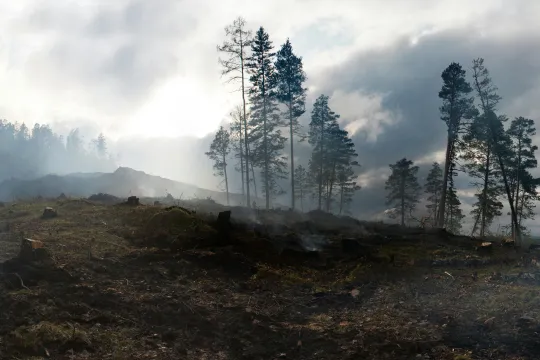
- Students will analyze maps demonstrating increased burn area, explore evidence from California's 2020 wildfire season, evaluate how fire management practices have changed over time, learn about the traditional fire management practices of the Karuk people, see how climate change has influenced the number of days that are conducive for cultural and prescribed burns, explain how Californians can use fire responsibly to prevent wildfires, and organize an activity to learn from others' worldviews.
Teaching Materials
Positives
- This lesson allows students to practice respectful communication and active listening, which are skills they can carry with them beyond the classroom.
- Students will get to explore a variety of hands-on activities and simulations that will help illustrate the key concepts related to this unit.
Prerequisites
- Some students may need explicit instruction for entering images and drawings into the worksheet.
- Students should understand climate change and how it increases the frequency and severity of droughts before reading the articles in Lesson 3.
- In Lesson 4, students may be unfamiliar with the term cultural appropriation, and may benefit from a brief discussion to define it and how it is harmful.
Differentiation & Implementation
- The Climate Emotions Wheel is introduced in Lesson 1. For additional translations of the wheel and other resources, teachers can visit this link.
- If educational free time on student devices is a classroom norm, teachers can add the simulation from Lesson 2 as an option for students to explore during this time.
- To make community connections, teachers can invite local fire management specialists or team members to talk with the class about current local practices for managing wildfires.
This resource from Ten Strands provides 7 lesson plans for students to explore how Californians can use fire responsibly to prevent destructive wildfires. Students will learn about the history of forest management, the role of Indigenous knowledge, and the impacts of climate change on fire practices. While it does not include original data, this resource would be a great addition to classroom discussions on environmental stewardship and cultural perspectives.
Teaching Tips
Standards
Resource Type and Format
About the Partner Provider
-thumb.webp)
Ten Strands
Ten Strands is a California–based nonprofit established in 2012. Their mission is to strengthen the partnerships, strategies, and systems that advance environmental literacy, ensuring all California TK–12 students thrive in sustainable, resilient schools and engage in meaningful environmental learning experiences, both in and beyond the classroom. They operate with a small, diverse, and nimble staff and strategic partners throughout the state. Ten Strands utilizes the largest and most diverse institution in California—the public school system—to impact 58 county offices of education, more than 1,000 school districts, approximately 10,000 individual schools, over 300,000 teachers, and 5.8 million children.
Scientist Reviewed
This resource has been reviewed by SubjectToClimate's climate scientists and verified for scientific accuracy and up-to-date information. Our review process ensures that every resource in our library reflects the current state of climate science.
Learn about our review process →